
GloPost
Upcoming event
The Weathering: Artem Chapeye in conversation with Sarah Gear
21 April 2026, 16:00-17:30
Online
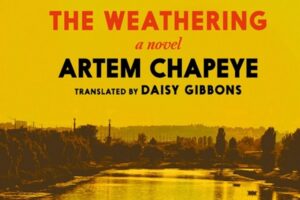
Glopost is excited to host a conversation between Ukrainian author, journalist and soldier Artem Chapeye and Dr Sarah Gear about The Weathering (2026, translated by Daisy Gibbons), his most recent novel to appear in English. Originally published in Ukraine in 2021 as Вивітрювання, the novel explores themes that became personally relevant to Chapeye when he decided to enlist in the Ukrainian army following Russia’s full-scale invasion in 2022.
The discussion will touch on Chapeye’s other titles in English translation, his 2018 collection of experimental non-fiction The Ukraine (translated by Zenia Tompkins 2024) and his 2025 book Ordinary People Don’t Carry Machine Guns (translated by Zenia Tompkins), which considers the motivations and consequences of his decision to enlist. More broadly, the conversation will reflect on the role of authors and translators in wartime, and on the humanity, optimism and love of Ukraine that permeates Chapeye’s writing.
Register via the following link: https://events.st-andrews.ac.uk/events/the-weathering-artem-chapeye-in-conversation-with-sarah-gear/
Who we are and what we do
Emerging at a moment of renewed reflection on the future of Area Studies, the Centre for Global (Post)socialisms, Southeastern, Central and East European Studies asks how we might pursue intersectional, interdisciplinary engagement with the “(post)socialist world” without reproducing extractivist or exploitative research paradigms.
The Centre foregrounds the entangled realities of (post)socialisms, challenging the traditional East–West gaze and the pervasive “westsplaining” that has shaped much of the field. Beginning from the concept of entanglement, our work explores how the core questions of Area Studies resonate across diverse yet interconnected contexts — from the depopulating Latvian countryside and the Polish–Belarusian borderlands to the deindustrialising landscapes of East Lothian in Scotland and South Wales.
We recognise that it is impossible to speak of the decolonisation of public space in Estonia without engaging with the Black Lives Matter movement in the United States or the Rhodes Must Fall protests in the UK. Likewise, any discussion of war, colonialism, and public memory in Ukraine must also confront the ongoing realities of settler colonialism and the colonial legacies that continue to shape Western Europe. At its heart, the Centre is devoted to tracing and theorising these transnational, interconnected transformations of (post)socialist worlds.
The Centre is committed to amplifying the work of scholars and practitioners who are reshaping the paradigms of Area Studies. By highlighting the transformative potential of collaboration across constructed regional and disciplinary divides, we promote a critical, care-based approach to knowledge-making — one grounded in inter-regional and intersectoral solidarities.
We particularly support early career researchers whose work engages with the complex politics, economies, and social conditions of global (post)socialisms. Our members welcome enquiries about opportunities for PhD, postdoctoral, and Visiting Fellow research within our intellectually vibrant and rapidly growing community of co-thinkers.